

What would a forest do?
Learning intention By the end of this lesson, students can describe a pattern from the natural world and suggest how it might inform a human response to change, pressure or cooperation.
- Time
- 42 minutes
- How the room works
- Small groups
- You need
- Paper and pens, with optional nature prompt cards
- Opens with
- What the trees are doing
Before you start
Keep the discussion about nature and people in general, and leave the opener's reflection private. Avoid presenting illness, disability, death or survival as simple metaphors for personal resilience.
Read the full safeguarding note Adapting it for your class A note home for this lesson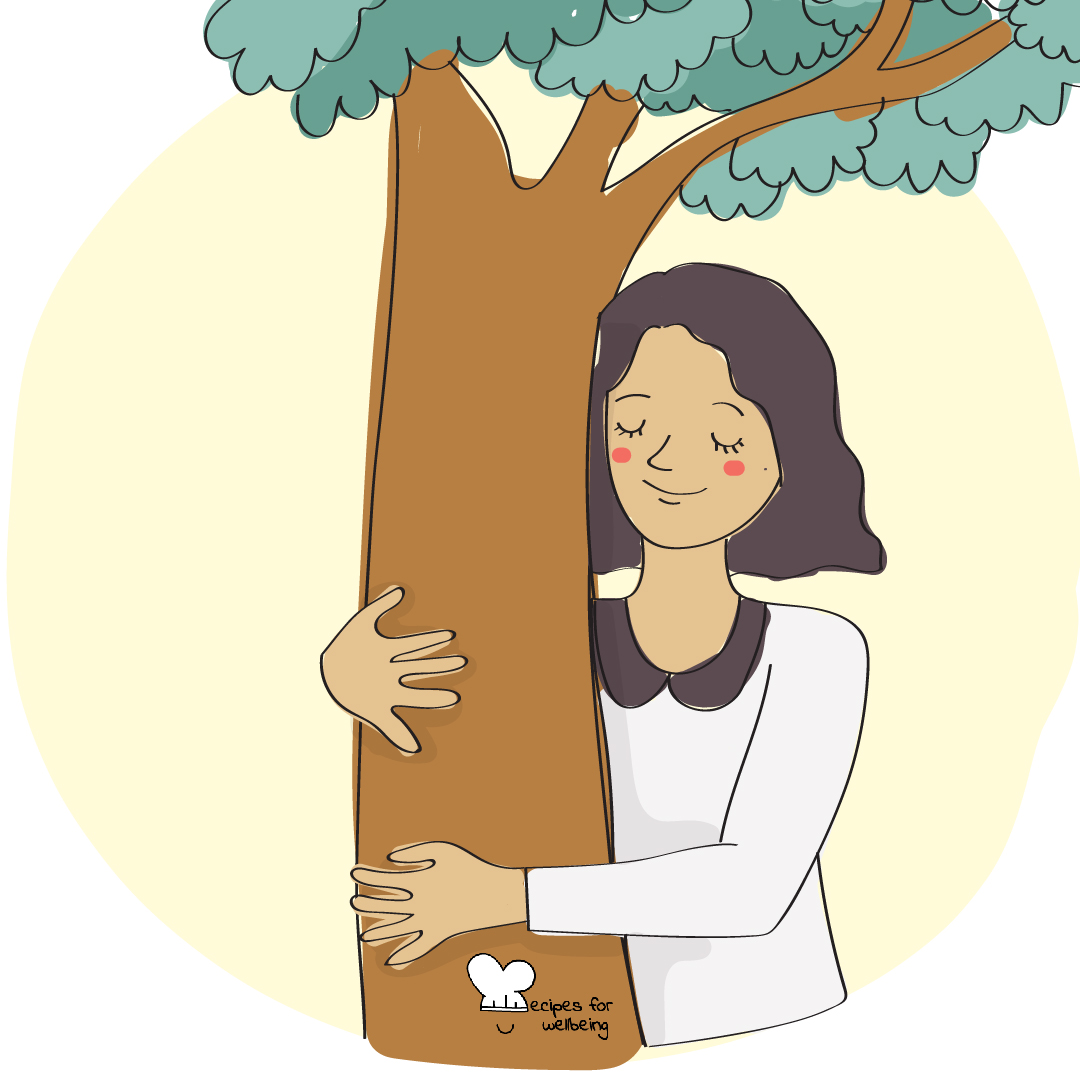
Open this drawing in the library
Why this matters
Living systems have developed many ways to adapt, cooperate and recover. Paying closer attention to these patterns can widen our thinking when the usual human answer is not enough. Nature will not hand us instructions. It can offer questions and principles worth testing.
Skill in context Drawing inspiration for wellbeing from nature and the processes of life.
On the skill of bioinspirationTry the interactive practiceTry it yourself first
“Ask the Living World” takes a few quiet minutes, just for you, before you teach it. Nothing you write in it is saved or sent.
Open with “What the trees are doing”
5 minUse What the trees are doing as a quiet observation. Students can look outside or bring a familiar tree to mind, and any reflection about letting go stays private.
At this time of year, many trees are letting go of leaves that have reached the end of their season.
Look through the window if you can see a tree, or bring to mind one that you know, and spend a moment noticing it.
Ask yourself quietly whether there is something small from this week that you are ready to put down, such as a worry you no longer need to carry or a plan that has already changed.
You do not need to find an answer or share anything aloud, because the question is enough for today.
Listen for Students can use a real tree or their imagination, and neither choice needs to produce a particular feeling or insight.
Teacher explanation
10 minRecipes for Wellbeing describes bioinspiration as consciously looking to nature for guidance, insight and innovation. This does not mean assuming that every natural process is kind or useful to copy. We observe a pattern, ask what principle may sit beneath it, and decide carefully whether that principle belongs in a human setting.
A river may suggest flexibility, a forest may show interdependence, and a seed may remind us that growth includes periods that look quiet from the outside. These are starting points for thought rather than rules for how a person should live.
Questions for the room
- Where have people already borrowed an idea from nature in design, technology or community life?
- What might a river, flock or forest help us notice about responding to change?
- What are the limits of treating nature as a teacher?
Nature's advice panel
18 min- Give each group a natural system to explore, such as a tree in autumn, a river, a flock, an ant colony, a coral reef or a seed in the soil.
- Ask students to describe what it does before interpreting it. How does it respond to change, share resources or work with its surroundings?
- Invite the group to name a possible principle in plain language, such as finding another route or sharing effort across a network.
- Ask where that principle might be useful in an ordinary school week, and where the comparison stops being helpful.
- Each group prepares one sentence beginning "We noticed..." and another beginning "This might invite people to..."
- Gather the ideas without turning them into instructions. Several interpretations can sit beside one another.
Private reflection
6 minWhich pattern from today would you like to keep thinking about, and what question does it leave you with?
How they reflect Private journal
Closing
3 minThe living world continues around us whether or not we are paying attention. When you need another way of seeing a problem, you can begin by looking closely and asking what nature makes possible.
Safeguarding
Keep the discussion about nature and people in general, and leave the opener's reflection private. Avoid presenting illness, disability, death or survival as simple metaphors for personal resilience. Follow usual safeguarding procedures if a concern arises.
If something a young person says gives you concern, follow your setting’s usual safeguarding route. This is not yours to carry alone.
Adapting it
In other settings
Take this lesson with you
The plan is editable, so you can change the names, the examples and the timings to fit the young people in front of you.
To teach

For students

Your email opens with this lesson named in the subject, and nothing is sent until you send it. A person reads these.
Or write to info@recipesforwellbeing.org
Take the collection into your classroom
Download the complete set of cards, lessons and educator notes in one file, or choose individual resources from their own pages.
Or only the cards: printable PDF or slides to project.

