

Finding a steadier next step
Learning intention By the end of this lesson, students can use the STOPP sequence and identify different forms of rest or support that may help them respond to pressure.
This classroom lesson is the base for session 8 of Ten sessions for advocates.
- Time
- 40 minutes
- How the room works
- Small groups
- You need
- Paper, pens and optional sticky notes
- Opens with
- The full stop
Before you start
Breath focus, stillness and internal observation are optional. Offer external attention, movement and non-participation.
Read the full safeguarding note Adapting it for your class A note home for this lesson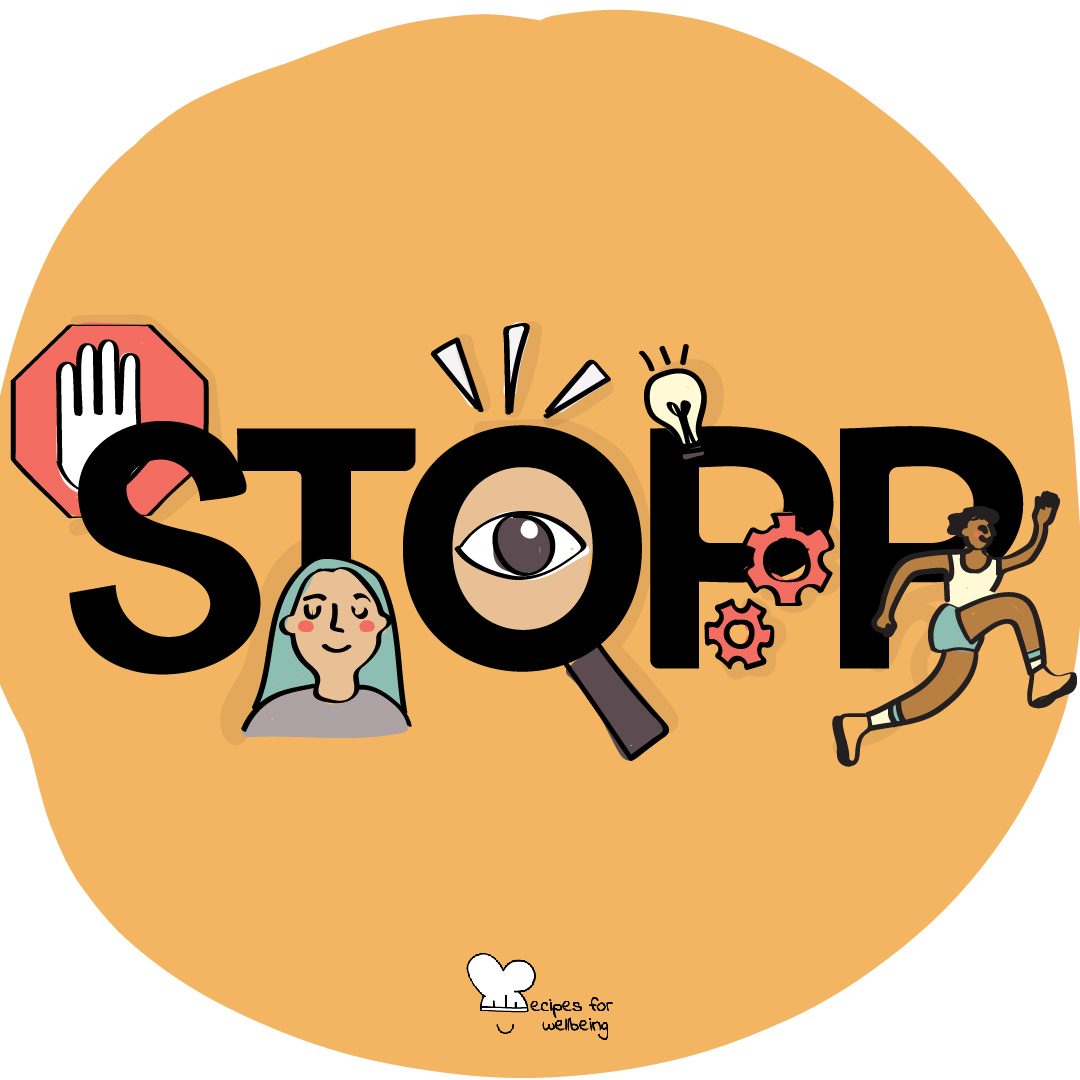
Open this drawing in the library
Why this matters
Pressure can narrow attention and make the next reaction feel immediate. Self-regulation is the practice of noticing what is happening, making a little space and choosing from the support that is available. Nobody is calm all the time, and some situations need safety, help or a change in conditions.
Skill in context Responding to rising tension with awareness, rest, support and deliberate action.
On the skill of relaxationTry the interactive practiceTry it yourself first
“Soften Half a Turn” takes a few quiet minutes, just for you, before you teach it. Nothing you write in it is saved or sent.
Open with “The full stop”
5 minUse The full stop to introduce STOPP. Students may breathe normally and interpret "pull back" as widening the view rather than leaving their body.
We are going to practise a short pause called STOPP, which can help create a little room before the next response.
S is stop for a moment, and T is take one comfortable breath or simply notice the breath you already have.
O is observe what is present, such as planning, worrying or replaying, without deciding that it should be different.
The first P is pull back enough to see the wider situation, and the final P is proceed with the next safe and useful step.
Listen for Leave quiet after "observe" without treating stillness as success. Make clear that proceeding may mean seeking help, leaving an unsafe situation or not responding yet.
Teacher explanation
10 minSelf-regulation includes the ways we influence attention, energy and action. It is shaped by sleep, sensory load, relationships, health, identity and environment, so it cannot be reduced to individual willpower.
STOPP is one brief option. Rest, movement, predictable routines, practical support, reduced demands and another person's presence may matter more. Regulation should help someone meet their needs and make a choice; it should not be used to make distress look tidy for other people.
Questions for the room
- What is the difference between looking regulated and having what you need?
- Which pressures are personal, and which are created by the environment?
- When might proceeding mean pausing longer or asking another person to step in?
Build a rest and support menu
17 min- Offer broad categories such as physical, mental, sensory, creative, social and emotional rest, explaining that they are prompts rather than a complete scientific model.
- Give each group one or two categories and ask for realistic options that cost little, fit different bodies and do not assume a supportive home environment.
- Add a column for changes other people or the setting can make, such as quieter space, clearer instructions, a break, fewer notifications or adjusted workload.
- Build one class menu that includes self-directed practices, relational support and environmental change.
- Invite students to notice privately what they may reach for and what would require an adult's help or permission.
- Keep the menu available without asking anyone to promise that they will use it.
Private reflection
5 minWhen life speeds up, what form of rest, support or change is easiest to forget, and which part of today's menu may be worth remembering?
How they reflect Private journal
Closing
3 minThe full stop at the beginning did not solve the pressures around us. It offered enough room to notice them and consider what next step or support may be needed.
Safeguarding
Breath focus, stillness and internal observation are optional. Offer external attention, movement and non-participation. If a student reports persistent sleeplessness, overwhelm or unsafe conditions, follow the setting's pastoral, health and safeguarding procedures.
If something a young person says gives you concern, follow your setting’s usual safeguarding route. This is not yours to carry alone.
Adapting it
In other settings
Take this lesson with you
The plan is editable, so you can change the names, the examples and the timings to fit the young people in front of you.
To teach

For students

Your email opens with this lesson named in the subject, and nothing is sent until you send it. A person reads these.
Or write to info@recipesforwellbeing.org
Take the collection into your classroom
Download the complete set of cards, lessons and educator notes in one file, or choose individual resources from their own pages.
Or only the cards: printable PDF or slides to project.

