

The connections in this room
Learning intention By the end of this lesson, students can name small actions that support belonging and identify everyday points of connection across a group.
- Time
- 40 minutes
- How the room works
- Whole class
- You need
- A simple 3 by 3 grid and pens
- Opens with
- Make it rain
Before you start
Keep prompts about interests and everyday preferences, never family circumstances, health, identity disclosure or painful experiences. Watch for isolation and provide alternatives to mingling.
Read the full safeguarding note Adapting it for your class A note home for this lesson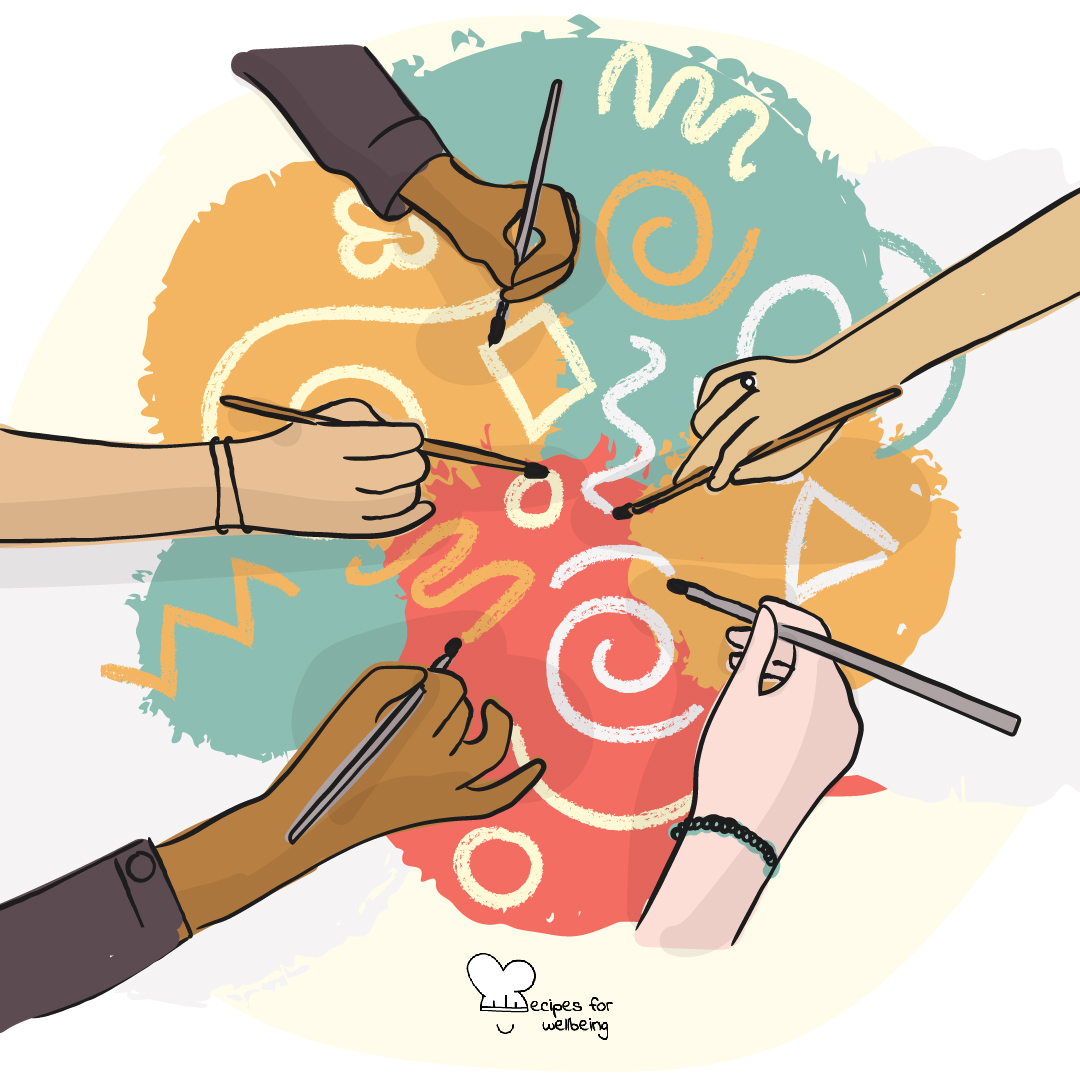
Open this drawing in the library
Why this matters
Belonging is shaped by ordinary moments: who receives a reply, who is welcomed into a conversation and whether there is room for difference. These choices will not remove wider barriers, and no one is responsible for their own inclusion. They still shape how a group feels and who gets to take part.
Skill in context Deepening the bonds between people who care about one another and feel that they belong together.
On the skill of community buildingTry the interactive practiceTry it yourself first
“Reach Back Across the Drift” takes a few quiet minutes, just for you, before you teach it. Nothing you write in it is saved or sent.
Open with “Make it rain”
5 minUse Make it rain to create a shared sound. Students can use smaller movements, join without touching the desk or listen throughout.
We are going to make the sound of a rainstorm together. This one gets loud, so if that is hard today you can rub your palms only, or just watch. Begin by rubbing your palms as the wind starts to rise.
Add the first drops by clicking your fingers, move into steady rain by clapping, and then pat your legs for the downpour.
Follow me back through the sounds until the room is quiet again.
Take a moment to notice what the group created by paying attention to one another.
Listen for Keep the sound at a comfortable level and make quiet participation visible as a valid choice.
Teacher explanation
10 minCommunity is not the same as sameness. People can belong together while bringing different needs, histories and opinions. Belonging becomes more possible when a group makes its expectations clear, notices barriers and treats care as something shared.
Small actions matter, but they sit inside larger conditions. Saving a seat can welcome someone; it cannot repair discrimination or replace the responsibility of adults and institutions to make a setting safe and accessible.
Questions for the room
- What small actions help a group feel welcoming without asking everyone to be the same?
- What can make joining a group difficult, even when individuals intend to be friendly?
- How can a group respond when someone is repeatedly left out?
Finding points of connection
18 min- Fill each square with a low-disclosure prompt, such as enjoying a comfort programme, learning another language, preferring rain to sunshine or having a song to recommend.
- Invite students to find a different classmate for each square. They may write a first name only with permission, leave squares blank or pass on any prompt.
- Give the class seven minutes and encourage one follow-up question before moving on. Filling the grid is not a race or a requirement.
- Make alternatives available for anyone who cannot or does not want to move around, such as partners coming to them, seated groups or a show of hands.
- Bring the group back and ask what common ground appeared in unexpected places. Do not invite comments about individual students.
- Close by naming the actions that made connection easier and any design changes that would make the activity more inclusive next time.
Private reflection
5 minThink of a group you are part of without naming it. What is one small action you could offer, and what is one change the group itself could make, to support belonging?
How they reflect Private journal
Closing
2 minToday's connections were ordinary, and that is where much of community is made. Belonging grows when people offer care and when groups remove the barriers that keep care from reaching everyone.
Safeguarding
Keep prompts about interests and everyday preferences, never family circumstances, health, identity disclosure or painful experiences. Watch for isolation and provide alternatives to mingling. Address repeated exclusion through the setting's pastoral and safeguarding routes rather than making a student solve it publicly.
If something a young person says gives you concern, follow your setting’s usual safeguarding route. This is not yours to carry alone.
Adapting it
In other settings
Take this lesson with you
The plan is editable, so you can change the names, the examples and the timings to fit the young people in front of you.
To teach

For students

Your email opens with this lesson named in the subject, and nothing is sent until you send it. A person reads these.
Or write to info@recipesforwellbeing.org
Take the collection into your classroom
Download the complete set of cards, lessons and educator notes in one file, or choose individual resources from their own pages.
Or only the cards: printable PDF or slides to project.

