


5 perfectionist profiles
Because balance doesn’t exist, you’re either operating under or over your energetic equilibrium. In other words, you’re in the realm of being either underwhelmed or overwhelmed. Perfectionists reliably choose to operate over their equilibriums. For perfectionists, the risk of being underwhelmed is much scarier than the risk of being overwhelmed. ―Katherine Morgan Schafler
👥 Serves: 1 person
🎚 Difficulty: Medium
⏳ Total time: 11-30 minutes
🥣 Ingredients: Access to a device connected to the Internet, “The perfectionist’s guide to losing control” book by Katherine Morgan Schafler (if you’re curious to find out more about it!)
🤓 Wholebeing Domains: Accomplishments, Liberatory Learning, Positive Emotion
💪 Wholebeing Skills: Abundance, Affirmation, Contentment, Humility, Liberation, Ordinariness, Reframing
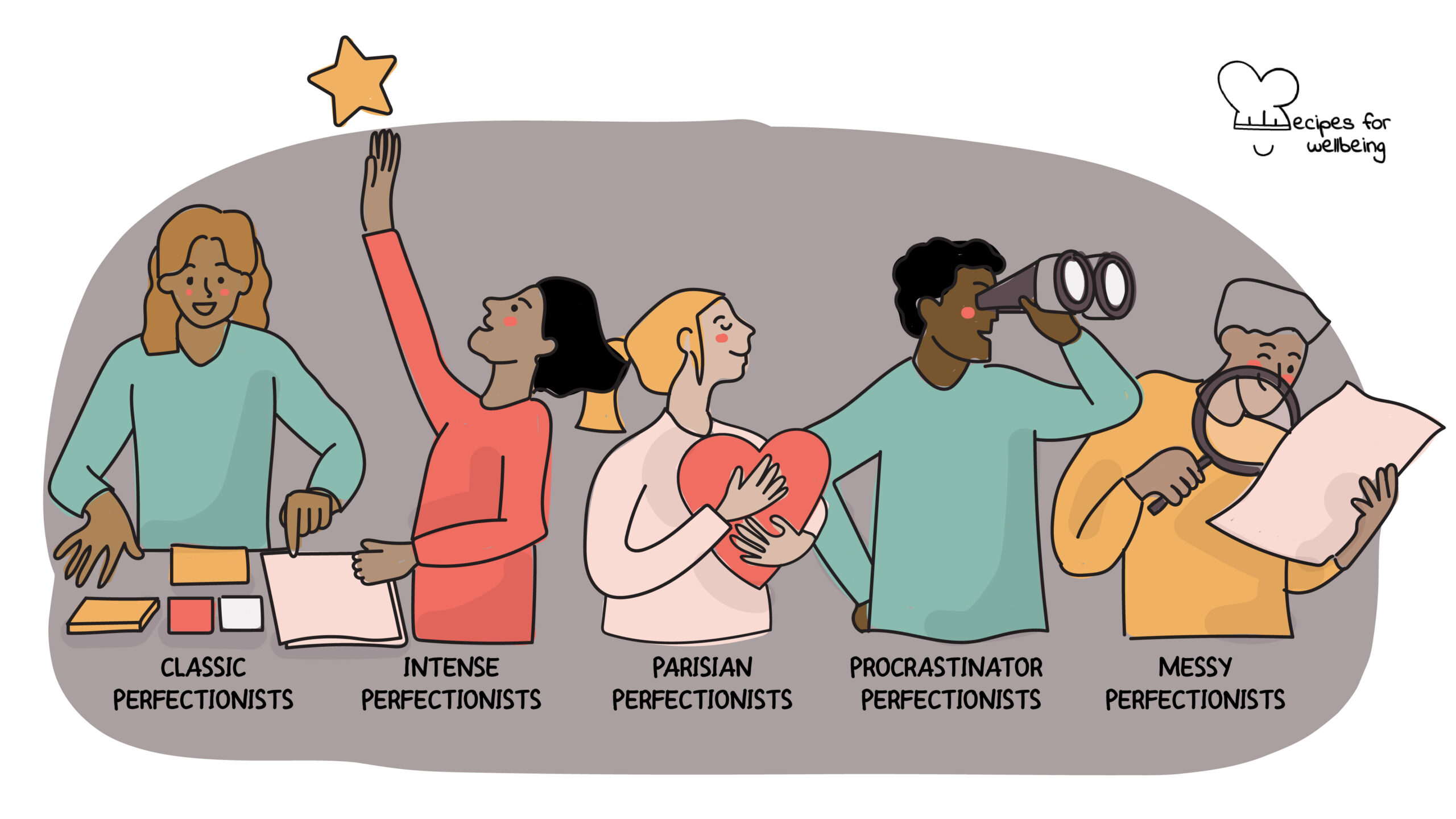
5 perfectionist profiles
📝 Description
Identifying your perfectionist profile.
In the recipe Coping with unhealthy perfectionism, we differentiated between intrinsic (or adaptive) and maladaptive perfectionism. In the book The perfectionist’s guide to losing control, author Katherine Morgan Schafler invites you to reframe the whole conversation, instead of stopping being a perfectionist, what if your perfectionism exists to help you?
She points out that while perfectionism has been split into two branches: adaptive and maladaptive, “mainstream discourse on perfectionism doesn’t include adaptive perfectionism”. What if perfectionism is meant to be managed, rather than destroyed? This recipe introduces you to 5 different perfectionist profiles as described by Katherine Morgan Schafler, and shares some tips to manage the maladaptive patterns and strengthen the adaptive ones.
👣 Steps
Step 1 – What is your perfectionist profile? (10’)
Take this quiz by Katherine Morgan Schafler to identify your perfectionist profile.
Disclaimer: Because perfectionism operates on a continuum, all perfectionists can embody aspects of each type within them. Though one type is usually dominant, it’s also possible to experience contextually specific manifestations of perfectionism. For example, you can be a messy perfectionist when it comes to dating but a classic perfectionist during the holidays. Rank your results to discover your broader perfectionist profile. For example, if you score highest in the Parisian perfectionist category but you scored almost as high in the messy perfectionist category, then you’re a Parisian perfectionist with a significant tilt toward messy perfectionism. If you score an equal amount in two or more categories, then you’re equal parts of those perfectionist types.
Step 2 – Unpacking the 5 perfectionist profiles (10’)
Once you have taken the quiz, spend a bit of time reading through these short descriptions for each perfectionist profile, as described in Schafler’s book.
- Classic perfectionists. Highly reliable, consistent, detailed-oriented. They add stability to their environment and operate with incredible transparency. They might struggle to adapt to spontaneity or a change in routine. They might experience difficulty connecting meaningfully with others.
- Intense perfectionists. Effortlessly direct and transparent, focused on achieving their goal, seeking a perfect outcome. Their standards can go from high to impossible. They can be punitive with others and themselves for not achieving them, sliding into defeatism.
- Parisian perfectionists. Strong capacity for empathy. They seek ideal connections and invest a great deal of emotional energy into everything they do. They hide their perfectionism because they want to appear effortless. They might fall into toxic people-pleasing, waiting for others’ approval..
- Procrastinator perfectionists. Opportunity-seekers, good impulse control, not lazy. They might fall into indecisiveness and inaction because once they start something, it can no longer be perfect. They feel a sense of loss around starting that other types of perfectionists don’t encounter.
- Messy perfectionists. Idea generators, naturally enthusiastic and optimistic, champions of possibility. They adapt well to spontaneity. They might struggle to stay focused on their goals and following through on their commitments. They also experience a sense of loss, but at a different stage in the process.
Step 3 – Harnessing the power of perfectionism (10’’)
Find below a few of our recipes to help you harness the power of perfectionism to help you and heal you (adaptive perfectionism) instead of limiting you and hurting you (maladaptive perfectionism).
Classic perfectionists
Intense perfectionists
Parisian perfectionists
Procrastinator perfectionists
Messy perfectionists