

Developing new wellbeing frameworks
Health is more than the absence of disease. Health is about jobs and employment, education, the environment, and all of those things that go into making us healthy. ―Joycelyn Elders
👥 Serves: 26-40 people, 41+ people
🎚 Difficulty: Medium
⏳ Total time: Ongoing
🥣 Ingredients: Open mindedness and the ability to share
🤓 Wholebeing Domains: Accomplishments, Liberatory Learning
💪 Wholebeing Skills: Accountability, Co-creation, Feedback, Flourishing, Holding space, Inclusion, Inquiry, Legacy, Liberation, Non-extracting
Developing new wellbeing frameworks
📝 Description
Develop wellbeing measurements based on local characteristics.
When it comes to politics and engaging with policies, a common concern tends to be around transparency – and the sheer lack of it. How did politicians come up with this new policy? Who did they consult within the community when developing these new plans? Who was in the room when it happened? An important part of engaging citizens is to remove any secrecy and have citizens, changemakers, and organisations at the forefront of decision making – we are, after all, the people that are impacted by changes.
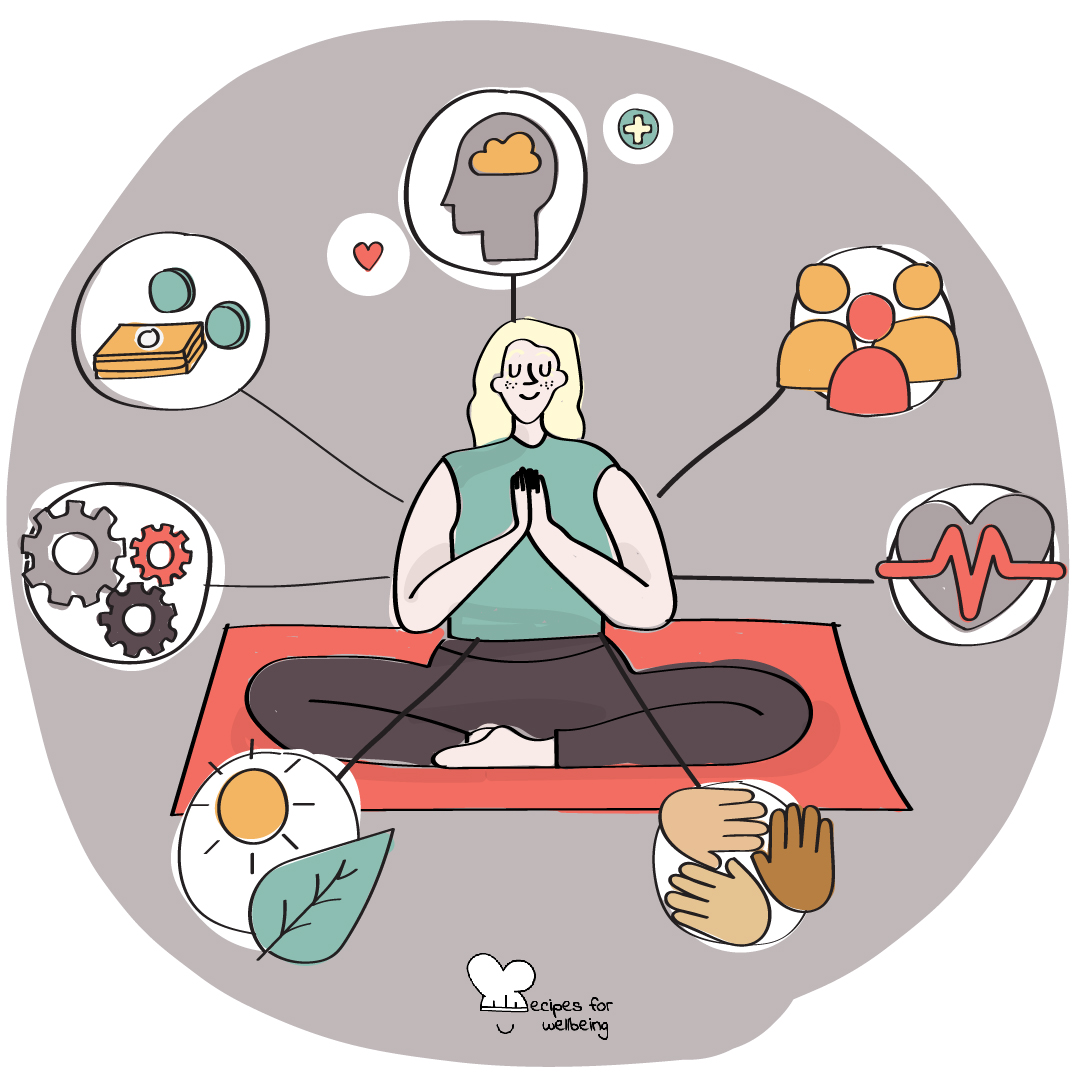
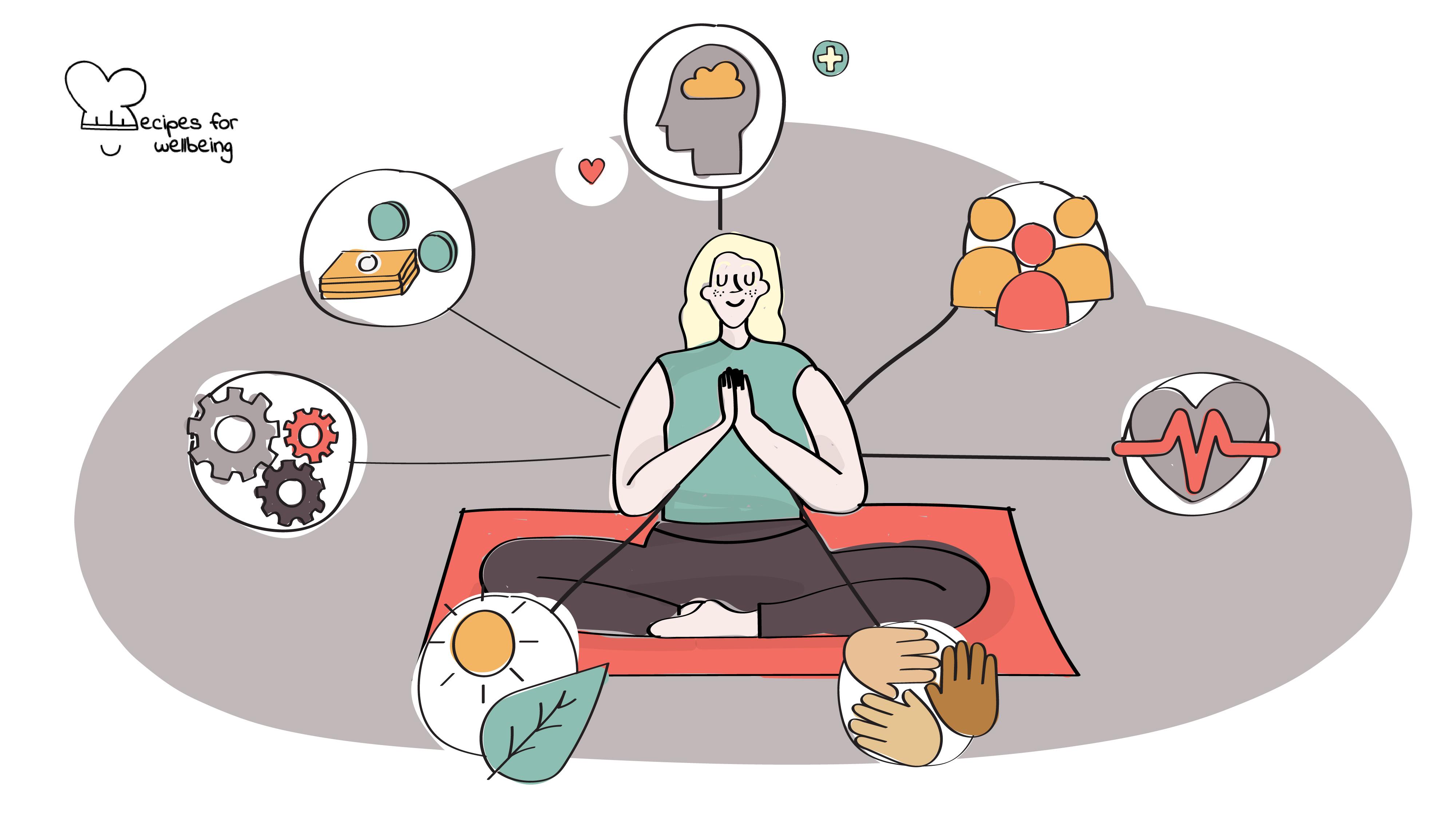
This recipe is about developing wellbeing measurements based on local characteristics. These are tangible data that can go on to influence policies that, at the heart, reconnect with wellbeing through equitable and sustainable progress. Wellbeing is a big topic and is not just “feeling good” or the absence of “feeling bad”, but a holistic and intersectional approach that should consider all of the following factors: health, safety, housing, access to service, civic engagement, education, jobs, environment, and income.
The benefits of creating wellbeing measures are vast and support cross-departmental working within the political and governmental level, encouraging working together rather than sector-specific thinking. It also helps to understand progress in a tangible and real way by reflecting on progress and supporting citizens with transparency. Finally, another great benefit is the citizen engagement, allowing citizens to truly influence the decision making and make them aware of their priorities, rather than these decisions being made without their thoughts and perspectives.
While this recipe can be done at the policy/governmental level, it can also be done within organisations that wish to make changes at various levels of their work and increase employee satisfaction. This recipe has been adapted by the compelling work from the OECD, “Sharpening our focus”, by our wellbeing content writer collaborator Marissa Del Mistro.
👣 Steps
Step 1 – Collect data
Depending on the unique circumstances of your wellbeing framework, you will want to begin by defining and beginning to understand what, how, and why data will be collected. For example, the development may include consultation, peer support groups, surveys, or monitoring in your community/workplace/governmental space that all work towards creating a unique wellbeing framework plan with objectives in place.
If you’re working with an organisation, you’ll want to involve key stakeholders, funders, and local councils in your area, as well as involve people in the finance team and the people in the communication team.
This step is important as it builds a story and foundation for understanding the underlying conditions that impact communities’ wellbeing, potential future concerns and how to adapt and make decision making from an impartial point and not an emotional one.
At this stage, it is about who will be the lead representative to champion the wellbeing framework. This person will strive to get others excited and involved. Typically this is someone who holds a senior role, with great connections and influence. This increases the chance and likelihood of success of it being truly integrated into decision-making processes.
What’s more, it will develop a stronger working relationship, encourage continued discussion, and create new partnerships that are important for influencing change in the future.
Step 2 – Analyse data
Voices, data, analysis, and stories from a wide variety of sources will lead to more successful, interesting, and honest data. It might be wise for organisations to implore the use of an outside data analyst or consultant to add their input from a more objective point of view.
The wellbeing measures should be accessible and ongoing to encourage consistent engagement from citizens, employees, or others being impacted. The wellbeing measure and data should be approachable, which could be done via an online format, in person, or whatever suits the needs best of the people engaging. This will take substantial effort but is worthwhile.
Step 3 – Define wellbeing
The next stage is to determine a theoretical framework, a specific structure that will support the theory of your research, to introduce and describe why the wellbeing framework should be developed in the first place. This could be created by the team working on it or they can implore data through research of other successful theoretical frameworks.
It’s imperative to get the voice of the people to define exactly what wellbeing means to them and what they need to prioritise to feel safe, healthy, and happy. Could it be that they wish to improve community safety? Prioritise elder services? In the workplace, could it be an increase of internal training or an increased definition of goals on a project?
Be patient in this stage and remember it might take some forward and progressive thinking depending on who you are working with. This is because policymakers and leaders may not consider wellbeing as intersectional and broad as it is. It might take some time persuading people to understand that wellbeing has a broad definition.
Step 4 – Involve as many people as possible
At the start of this wellbeing framework, there will be excitement, momentum, and the want to be involved. During the development stages, sustainability needs to be considered, “How can this withstand time?” and “How can we ensure the longevity of this framework?”
This can be done by always looking to increase the voices of people involved, letting citizens/employees update about new plans and potential benefits, should keep the framework at the forefront of people’s minds and excite folks to not only maintain the framework but to continue to grow and adapt it.