

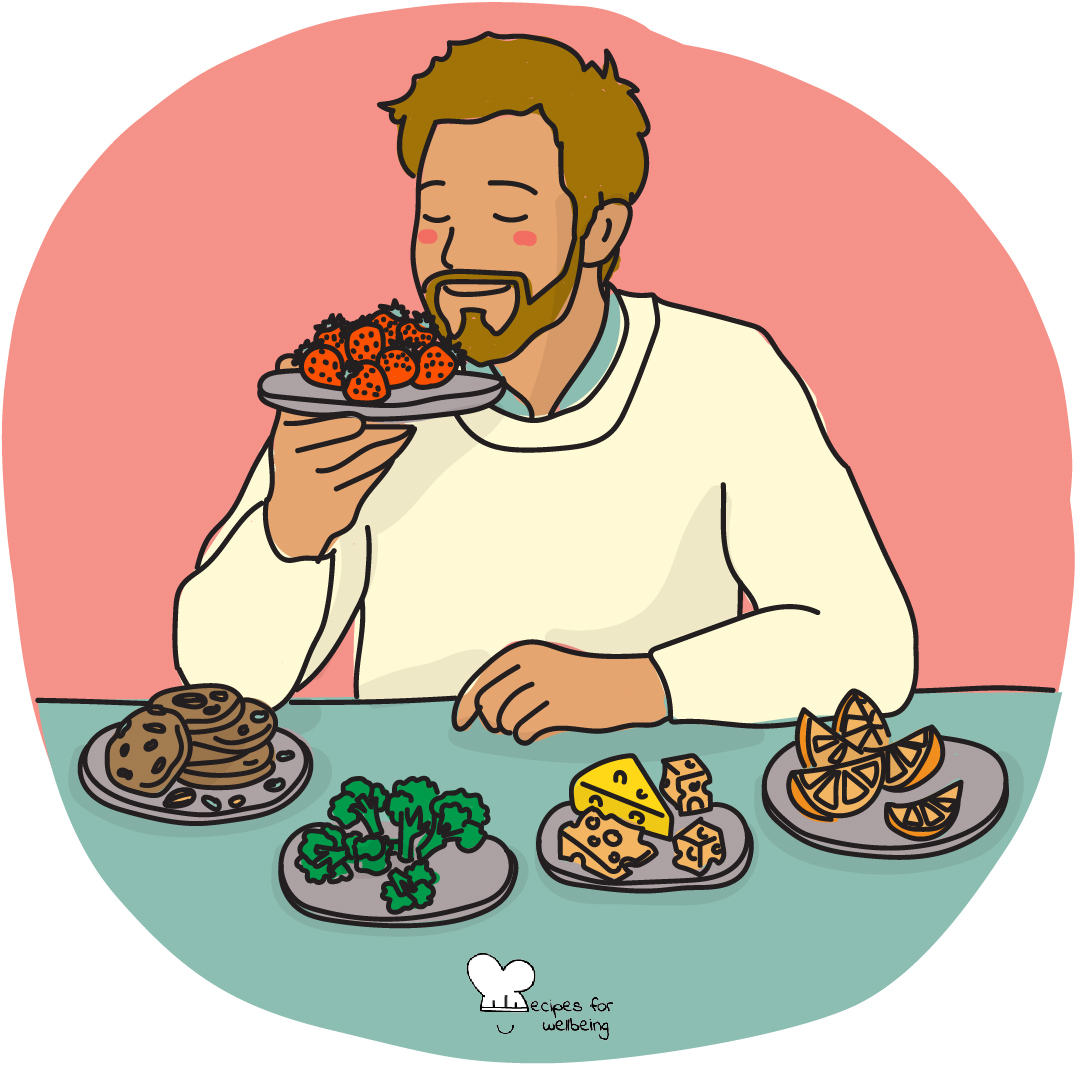
Emotions through taste and smell
We remember 35% of what we smell, compared to only 5% of what we see. ―Brain Research Fondazione Onlus, Memoria olfattiva. Profumi ed emozioni: Così nel cervello vanno di pari passo. Il ruolo dell’ippocampo svelato da alcuni studi recenti (2026).
👥 Serves: 2-10 people
🎚 Difficulty: Easy
⏳ Total time: 31-60 minutes
🥣 Ingredients: 3–5 different food items, a few different baking ingredients or aromas, e.g. vanilla, cocoa, cinnamon, butter, etc. (each person brings their own), small plates or containers, paper and pen
🤓 Wholebeing Domains: Awareness, Positive Emotion, Ritualising
💪 Wholebeing Skills: Embodiment, Focus, Mindfulness, Pleasure, Ritualising, Self-awareness
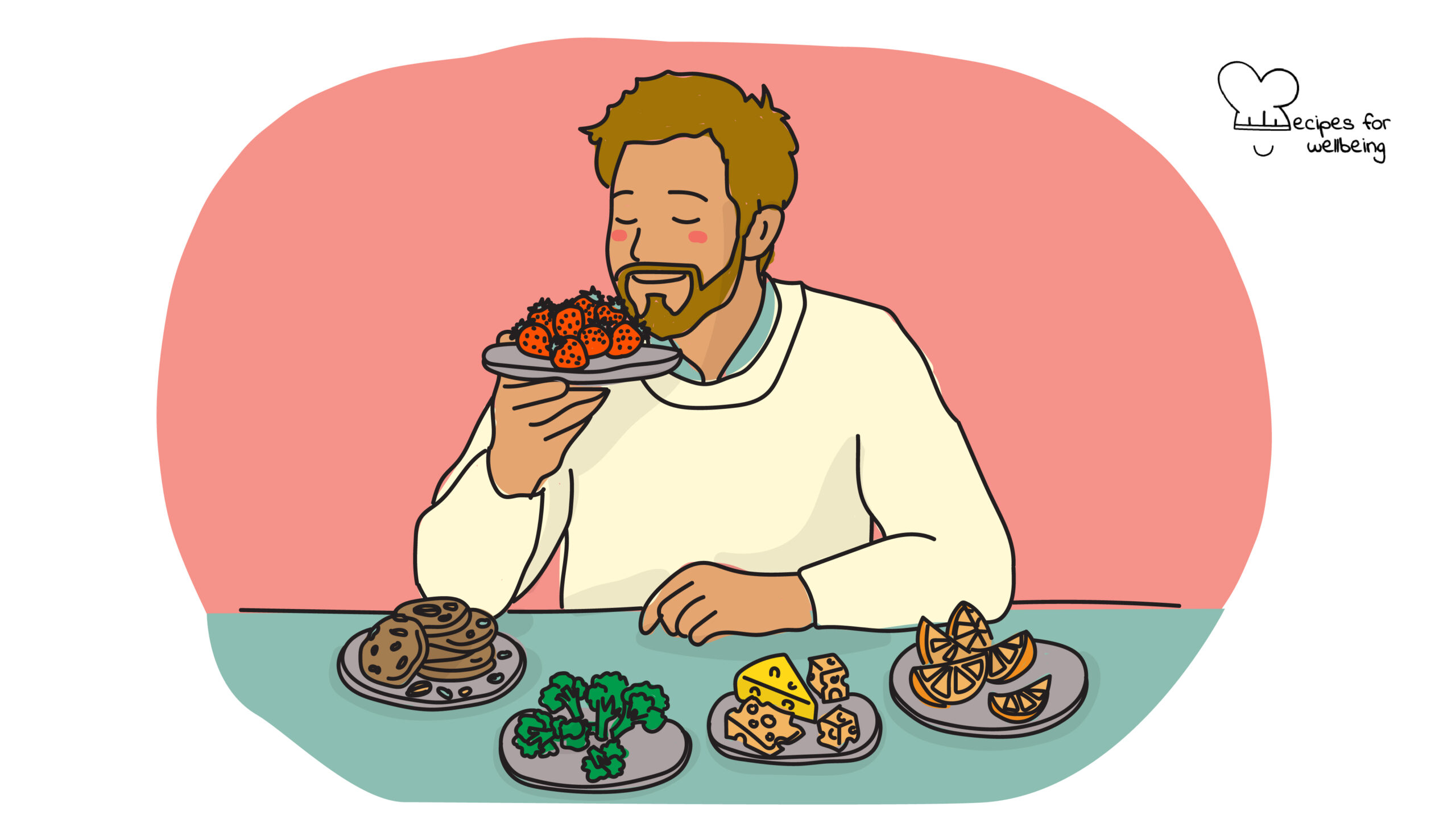
Emotions through taste and smell
📝 Description
Reconnecting with childhood emotions through taste and smell.
Scent and flavours are powerful triggers that can awaken deep-rooted memories and emotions. The following activity aims at offering a playful space for you to listen to your own sensations and share them with others, fostering a deeper and authentic connection with yourself and others.
This recipe has been kindly donated by Alice Siracusano of Nati Per Cambiare.
🌟 Steps
Step 1 – Sensory preparation (10’)
Set the table with the selected food items and aromas brought by your activity partner (or participants). Arrange them in small plates or open containers, but make sure to cover them so they are not revealed right away.
Explain that the goal of the experience is to evoke emotions through the senses of taste and smell, awakening childhood memories. There are no right or wrong answers; it is about exploring whatever emerges. Spend a few minutes in silence before moving to the next step.
Step 2 – Guided sensory questions (25’)
Whenever ready, uncover the food items and baking ingredients/aromas and spend the next five minutes exploring them through your sense of smell and taste. You can try as few or as many items and ingredients as you’d like. Then, whenever ready, take 10 minutes each to answer the following questions. Whoever is in the listener role takes notes or writes down keywords.
- Which food items and ingredients do you associate with a particular childhood memory?
- Which of these tastes or scents is your favourite and what emotions does it spark? When was the last time you felt emotional while eating something?
- Which of these tastes or scents do you NOT like? How does it make you feel? What childhood memory might be behind it?
Step 3 – The “heart” flavour (15’)
Each person chooses one of the food items or ingredients/aromas that evoked a strong, positive emotion for them. Call it the “heart” flavour. Now, take turns in tasting and smelling this food item or ingredient/aroma mindfully, in silence, and with your eyes closed. When you’re done, each person writes down three words that describe the emotion they felt.
Step 4 – Final sharing (10’)
Share the three words with each other. Discuss whether your perception of your present has changed in any way thanks to the memory that resurfaced (e.g. your relationship to the other person/people).
Step 5 – Bonus task
Pick a day in the following week to cook with that food item or ingredient/aroma. If you wish, keep a record in your journal:
- When did you do it?
- What emotions did it spark?
- Who did you think of?