
Inner message hunt
Small shifts in the language people use to refer to the self during introspection influence their ability to regulate their thoughts, feelings, and behavior under social stress. ―Ethan Kross
👥 Serves: 2-10 people
🎚 Difficulty: Easy
⏳ Total time: 31-60 minutes, Ongoing
🥣 Ingredients: Pen and paper, 5 sticky notes per person, a phone, a house or shared space with hiding spots, a timer or stopwatch
🤓 Wholebeing Domains: Awareness, Community, Liberatory Learning, Positive Emotion
💪 Wholebeing Skills: Affirmation, Challenging, Liberation, Play, Reflection, Reframing, Relating to Others, Self-awareness
Inner message hunt
📝 Description
Reprogramming automatic patterns with gentle words.
Many of our fastest and most intense reactions originate in the so-called “old brain”, also known as the limbic system, consisting of the amygdala and the circuits built to protect us from danger and processing emotions. These automatic responses, like fight-or-flight, are meant to “save our lives”, but sometimes our brain short-circuits and we end up trapped in controlling patterns of self-sabotage. These patterns can severely impact the way we build relationships with those around us, both in life and at work.
Research in neuroscience, including studies by Ethan Kross and Tania Singer, shows that self-talk – meaning speaking (and writing) to one-self consciously – can soften the power of these automatisms. And doing so in a safe relational context is even more powerful because words become reciprocal gifts: you recognise you are not alone in your inner struggles.
This activity guides you through a gamified exercise to rewire your brain, fostering mutual appreciation and care. This recipe has been kindly donated by Alice Siracusano of Nati Per Cambiare.
🌟 Steps
Step 1 – Preparation (10’)
Choose a quiet, interruption-free moment and gather together with those who live with you around a table with pen and paper. Explain that the activity consists of writing messages addressed to your “automatic brain”: short, simple, clear sentences. The idea is to speak to that part of you that reacts impulsively to fears, anxieties, and things that scare you. Remind them that this is not a creative writing exercise; the messages should be direct, in the forms of ‘commands’ or ‘reminders’.
Step 2 – Write the notes (10’)
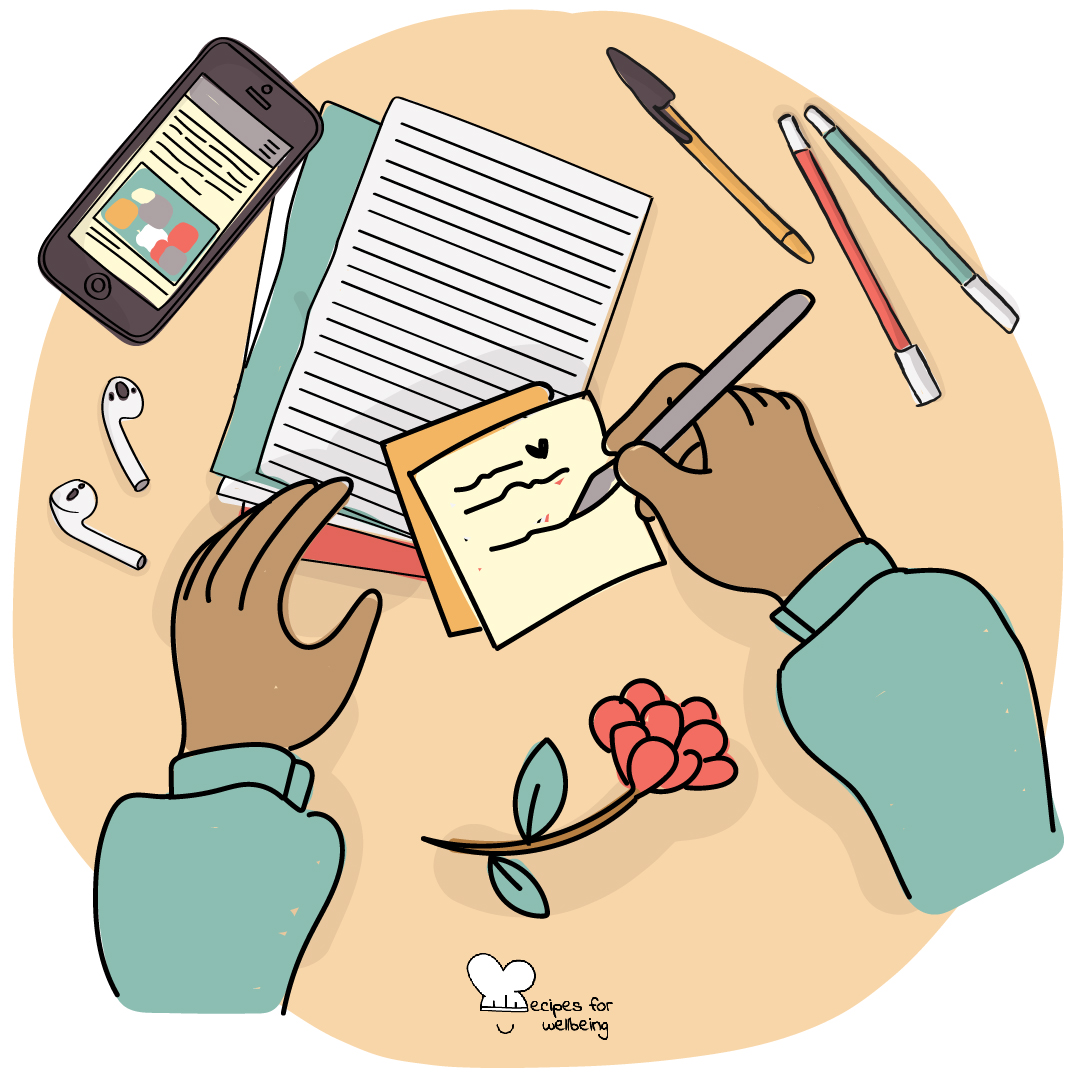
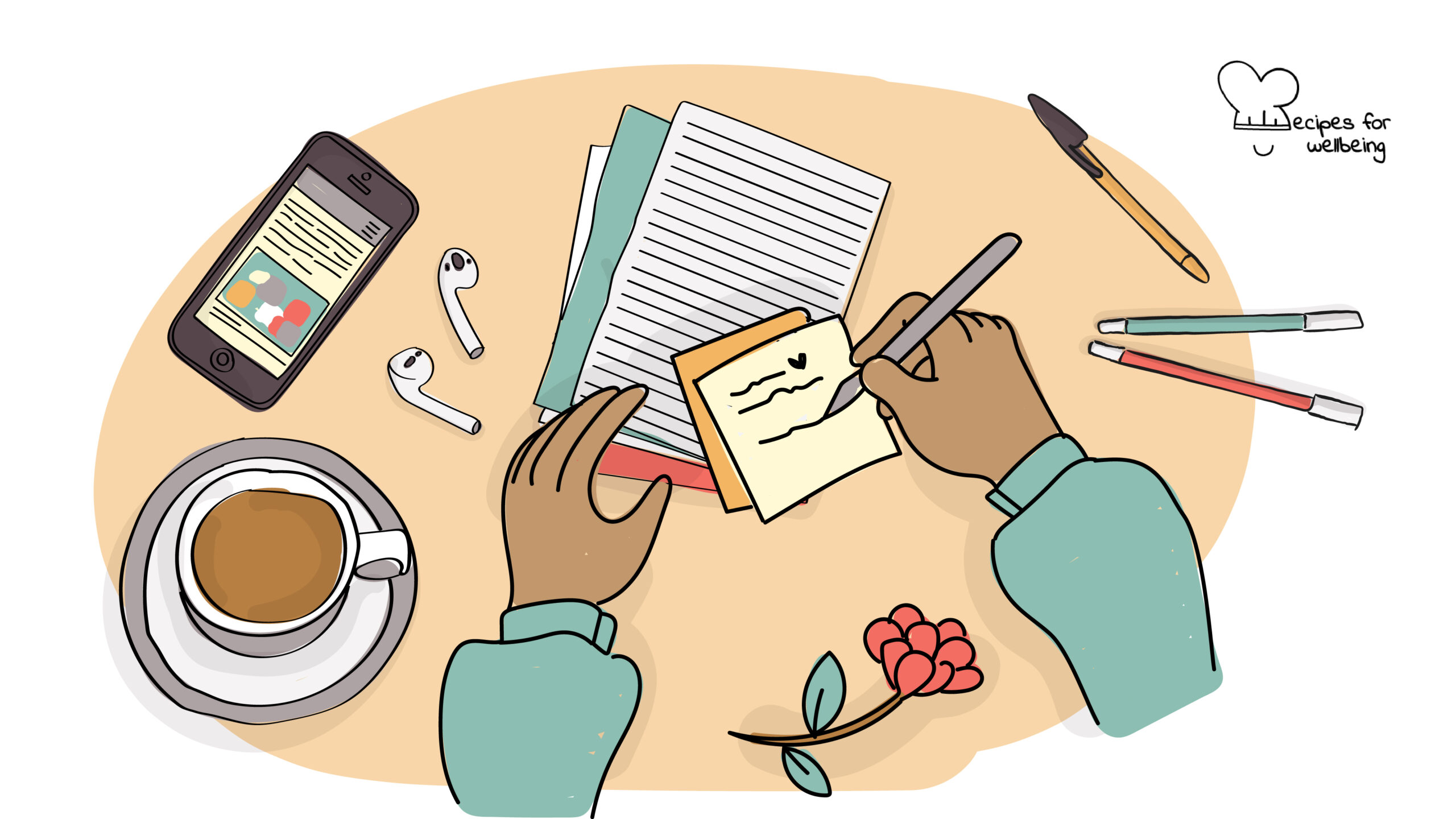
Each person gets 5 sticky notes and writes a message on each of them. For example:
- You are not a victim.
- Sometimes your brain is not reliable.
- Remember: you don’t need to throw away any parts of yourself.
- Breathe: you are not in danger right now.
- You can choose how to respond to any situation.
Step 3 – Play hide & seek (15’)
Either at the same time or taking turns (depending on the size of your group and the space), spend 5 minutes to hide your notes in different parts of the house. Hide them well, but not in a way that makes it impossible to find them. Then set a 10-minute timer and invite everyone to search for the hidden notes.
Important! The winner is the person who finds and photographs the most notes.
Step 4 – Sharing round (15’–20’)
Regroup around the table. One by one, read aloud the messages on the photos of the notes you found. After each, you may briefly share:
- How do the words land? Do they resonate?
- Would the person who wrote it wish to elaborate on what’s behind it?
- When and where could this sentence be useful?
Step 5 – Practise daily (ongoing)
Leave all the notes in their original hiding places, so that in the following days, whoever finds them receives a small, unexpected reminder. You may also repeat the game once a month, renewing the messages.